
Acupuncture for Back Pain in Westminster: How it Works and What to Expect
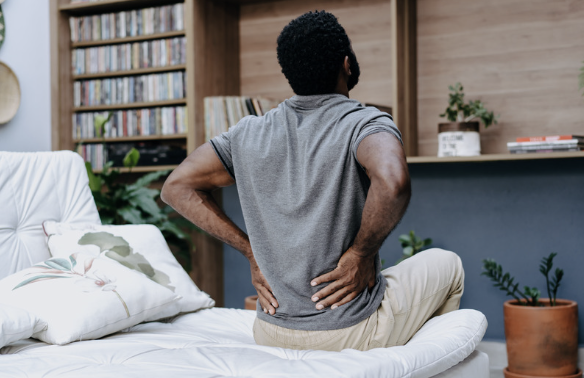
Do you spend most of your day sitting at a desk, in an uncomfortable chair, with less-than-perfect posture? You’re not alone, and it’s no surprise that back pain is one of the most common reasons people come to see me in my clinic.
Of course, desks aren’t the only culprit. Standing for long periods, or an old sports injury that never fully shifted (or has come back with a vengeance years later), can do it too.
Whatever the cause, acupuncture can be a natural, drug-free way to help reduce pain and improve your range of movement, so that
How Acupuncture Works for Back Pain
Acupuncture works in several ways that are increasingly understood through a Western medical lens, not just a traditional one.
It stimulates the body's natural pain-relieving chemicals (endorphins)
Improves local blood circulation to tight or overworked muscles
Relaxes tense muscles around the spine
Reduces localised inflammation
Calms the nervous system's response to pain
Acupuncture encourages your body’s own healing mechanisms to help reduce pain so you ca get back to what you enjoy doing most ✨
How Many Treatments Will I Need?
Acupuncture works on a cumulative basis - meaning, that one treatment won’t cut the mustard! I suggest at least 6-8 weekly treatments, as this allows us to build on the progress from the last treatment.
Once your back pain is under control, we can start to taper out your treatments to once a fortnight, once a month or just a top up session if you feel your back starting to flare up again.
What to Expect During the Treatment?
Having completed a full assessment of your back, range of movement, felt for any tender points, I will likely place a few needles in your hand, and ask your to move around, to see if this has had any changes in your back pain. After which I will use a combination of acupuncture, Tui Na (massage), to help release your back fully.
Acupuncture and Tui Na is a very relaxing combination and people often fall asleep during the treatment and go away with an overall sense of calm.
Simple Self-care Tips
👉 Breathe deeply. There are muscles in our lumbar spine, are connected to our diaphragm. So when we take deep breaths, we are actually activating muscles in our lower back. For some this can be a little tender at the start, but after while the pain will start to ease, as the muscles are activated and released.
👉 An obvious one, but avoid sitting for a long time. If you can get up from your desk once an hour, to get a drink, go to loo or simply do a quick office lap, this will help to reduce back pain, build up by keeping things moving.
👉 Take an epsom salt bath for 20 minutes. This is a great way to help relax muscle of the back at the end of a long day.
👉 Keep exercising! Movement is so important, and often when we are injured or in pain, we tend to stop moving that area - which is the worst possible thing to do! This means that your back will continue to seize up further, your back becomes stiffer, more pain, you move less and so on. So I encourage you to keep moving as long as it doesn’t cause you any real pain.
Ready to get help?
If you're struggling with back pain and would like to see whether acupuncture could help, you're welcome to book an appointment at my Westminster clinic.
What does the research say?
Research in 2017 found that acupuncture reduced pain immediately after treatment in people with non-specific low back pain, when compared with sham acupuncture.
Evidence of efficacy of acupuncture in the management of low back pain - PubMed
A 2023 review found acupuncture for low back pain and confirmed that acupuncture led to a meaningful reduction in pain compared with control groups.
Acupuncture in chronic aspecific low back pain: a Bayesian network meta-analysis - PubMed
Taken together, the evidence supports acupuncture as something that can help with short-term pain relief for back pain - rather than a claim that it treats or cures the underlying cause.
Clinical Guidelines
Three out of four of these clinical guidelines find in favour of using acupuncture for low back pain.
Scottish Intercollegiate Guidance Network: SIGN 136 (2019). Management of Chronic Pain Recommends acupuncture for low back pain.
NICE Guidelines NG59 (2016, updated 2020). Low back pain and sciatica in over 16s: assessment and management
Does not recommend acupuncture
Agency for Healthcare Research and Quality (AHRQ) Comparative Effectiveness Review Number 227. Non-invasive Non-pharmacological Treatment for Chronic Pain: A Systematic Review Update [link pdf]
Recommends acupuncture for low back pain
The Joint Federal Committee of Physicians and Health Insurance Plans in Germany (Gemeinsamer Bundesausschuss, G-BA)
Recommends acupuncture for lower back pain. [link pdf – German]